
BRIX Electrical and Air installs EV chargers across Brisbane and Ipswich, sized to your car and your home, not the biggest unit on the shelf. Fully installed, Get a fixed-price quote after a short site visit.
4.9 stars
Brisbane's most trusted team
Contact Us
EV charging runs through five stages: grid or solar, switchboard, wallbox, onboard charger, battery. The slowest stage sets your charge rate.
Most Brisbane homes run single-phase power. A 32A circuit delivers 7.4kW.
If your car’s onboard charger only accepts 7.2kW, a 22kW three-phase wallbox charges at the same speed as a 7kW unit, for more cost and complexity.
Brodie Rix puts it plainly: most customers ask for 7kW because that’s the number they’ve heard. Half don’t need three-phase power at all.
About 90% of Queensland homes are single-phase. A 4.6kW charger suits drivers under 50km a day; 7.4kW suits heavier use.


The rules got simpler on 1 October 2026. Energex and Ergon Energy Network withdrew the requirement that forced 7kW (32A) home chargers onto a network control device, a controlled tariff, or a turned-down 20A setting.
A single-phase 32A charger can now be installed at its full rating on your main tariff. Our guide to the new EV charger rules QLD covers what changed and what it means if you already have a network-controlled charger.
The network device is gone, but the responsibility moved to your electrician. Before a charger goes in, we:
Any of that goes in your written quote before work starts. Want the numbers first? Our EV charger installation cost guide breaks down typical prices.
BRIX Electrical and Air’s residential electrical team handles any network paperwork on every EV installation. You don’t manage that process yourself.

Three brands cover most EV charger installations BRIX Electrical and Air handles in Brisbane. The right one depends on what’s already running in your home.

SolaX
Default for homes without a brand preference. Handles load limiting, scheduling, and solar surplus charging. Most standard single-phase installs at BRIX use SolaX.

Sungrow
BRIX’s main solar and battery brand. If your home already runs Sungrow solar panels or battery hardware, a Sungrow charger fits the same app and ecosystem.

Sigenergy
Suits homes already on a Sigenergy system. Gateway, battery, solar, and charger run through one app, tightly integrated.
If you have existing solar, the brand question matters more than it seems. Solar divert, using surplus solar before drawing from the grid, needs a charger with CT metering on your main tariff. Since the October 2026 rule change, that setup no longer needs a network control device. BRIX’s solar services team can confirm compatibility before you order.
Considering a battery too? Start with solar battery installation advice first, a battery bought mainly to charge your EV overnight rarely makes financial sense on its own.
Family owned and operated across Ipswich, Brisbane and Logan since 2021.
Electrical Contractor Licence 88304. Every EV charger install is tested and certified before handover.
The crew that quotes your charger is the crew that installs it.
A site visit first, then one price in writing before any work starts.
Member of Master Electricians Australia, and CEC accredited for solar and battery work.
Charger, switchboard and solar work handled by the same team, so nothing falls between trades.
A two-storey Brisbane home needed a charger installed on the upper level. Cable routing ran through an existing hallway light between floors, avoiding the need to open walls. BRIX Electrical and Air installed a dedicated 32A circuit with CT metering behind the finished wallbox.
Nameplate: 32A, 7.2kW. Charging starts automatically when solar surplus is available during the day.
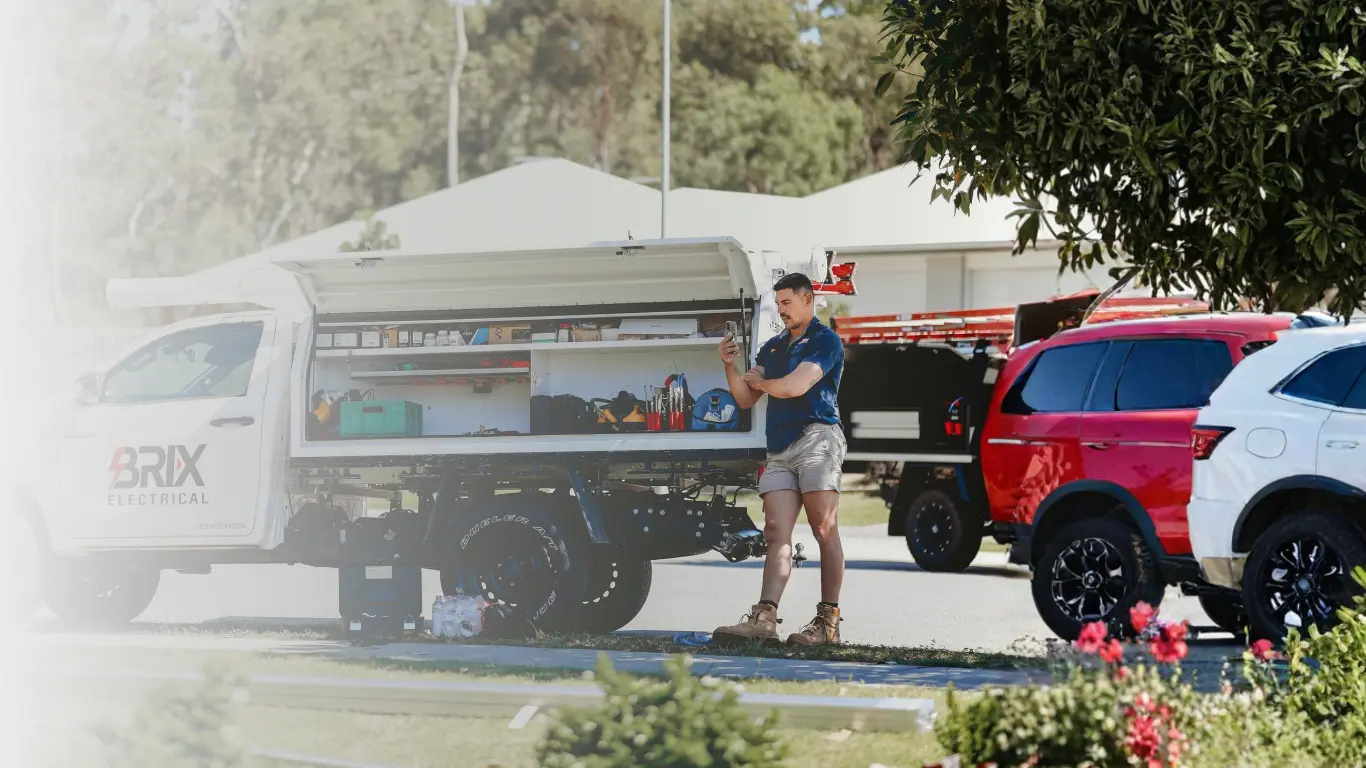
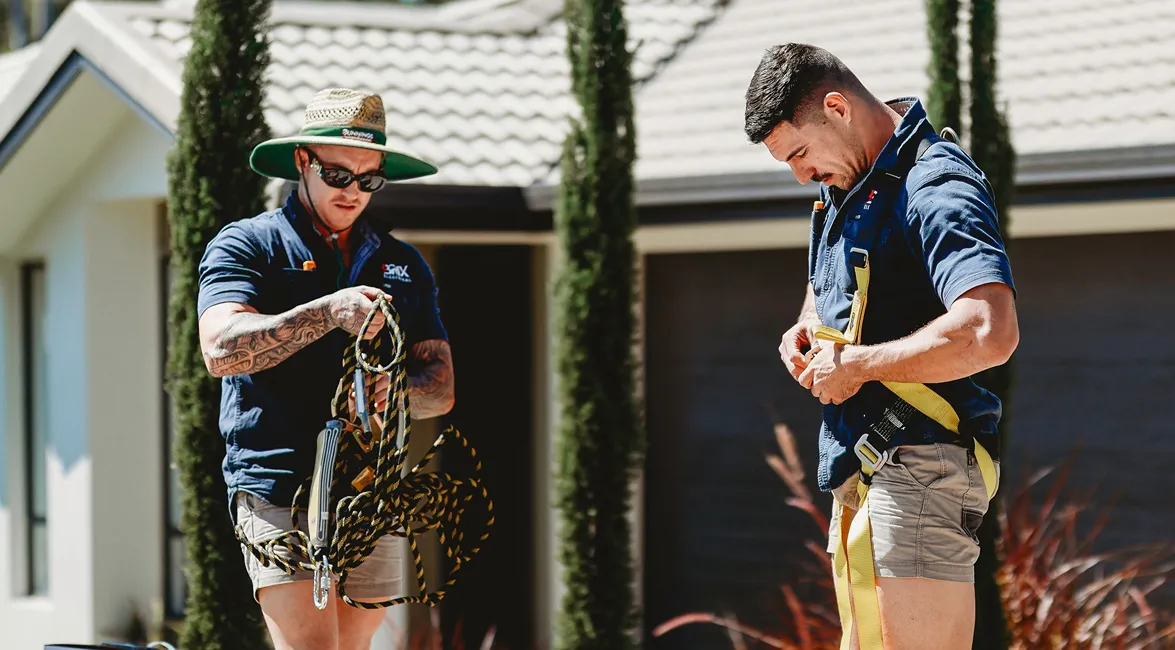
A home already running Sigenergy solar and battery hardware. Adding the Sigenergy EV charger brought the gateway, battery, solar inverter, and charger into one platform. The app shows charging at 20A / 4.8kW, deliberately set below the 32A maximum to stay within the home’s load capacity without a switchboard upgrade.
The customer supplied the Tesla Wall Connector. The existing three-phase switchboard was full, with no room for an additional circuit. BRIX Electrical and Air designed and installed a dedicated sub-board to house the EV circuit.
The switchboard upgrade was completed alongside the EV installation, with full documentation and Energex compliance lodged.
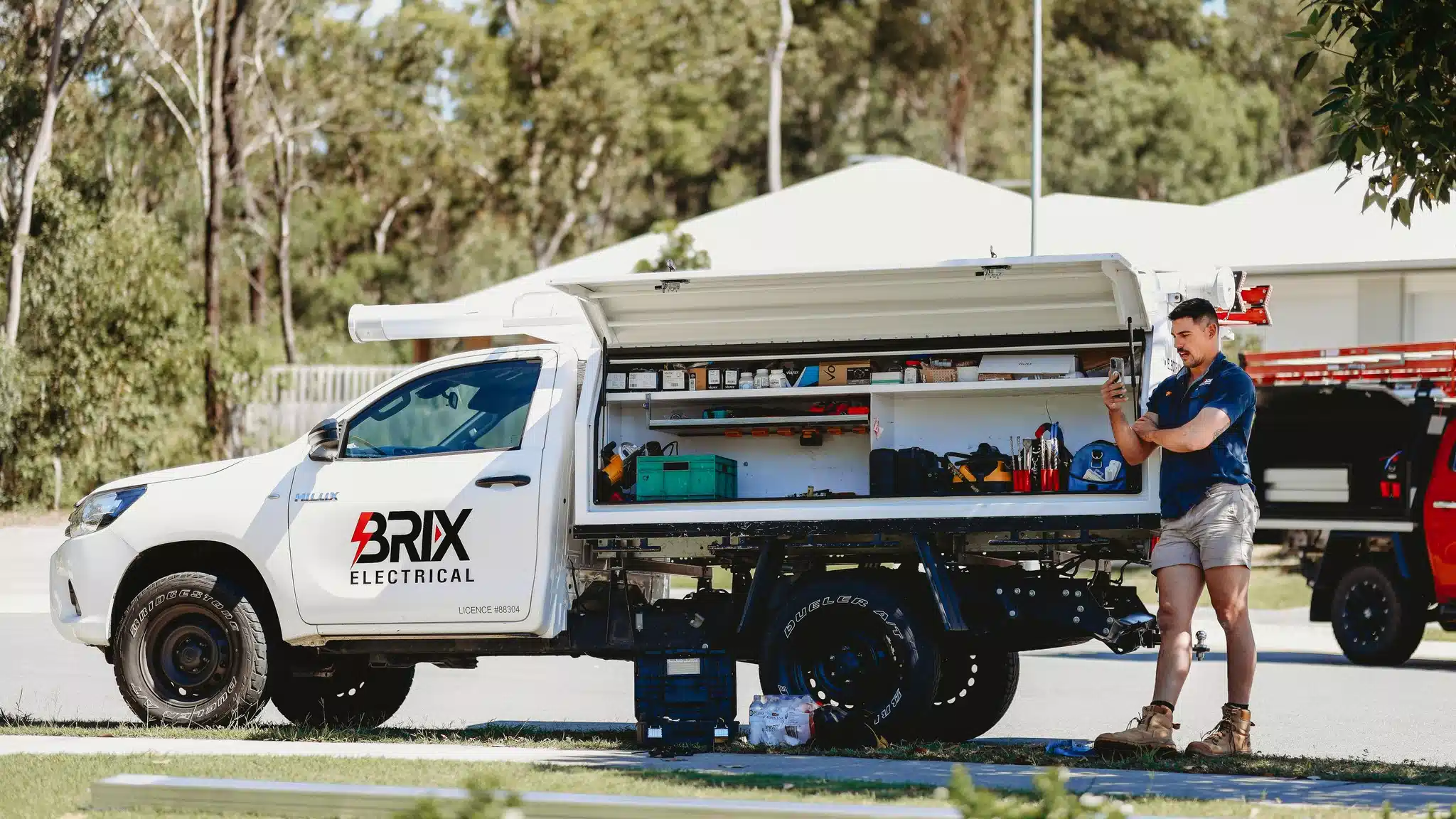
Before recommending anything, BRIX Electrical and Air works through six questions with every EV customer: which car, how much daily driving, single- or three-phase supply, existing solar or battery, which smart features matter, and budget and support expectations.
The site visit comes next. BRIX Electrical and Air runs a documented process from site visit through design and quote, job documentation, and install, test, and handover. Fourteen people. One point of contact throughout. Licence 88304, ARC AU068598.
This is not a sales process. It is an engineering process. The six questions exist because a charger that does not suit your car, your supply, or your solar setup is a waste of money, and sometimes a compliance problem.
Call (07) 3060 9100 or get a free quote online.
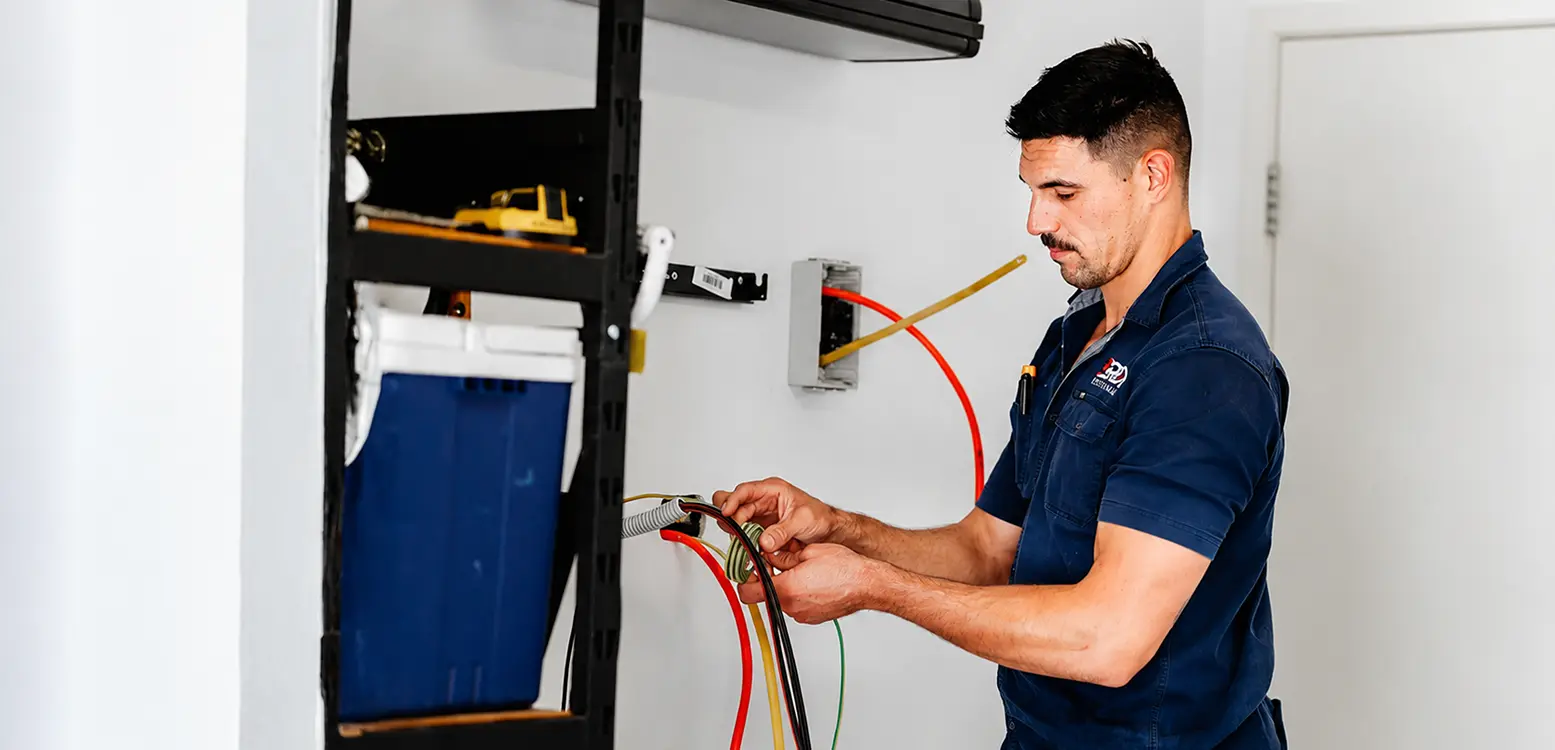

A standard 7kW single-phase EV charger, fully installed, ranges from $1,350 to $2,200 in South East Queensland. That range reflects differences in hardware, cable routing complexity, and whether CT metering is included.
If your switchboard needs upgrading before installation can proceed, add $1,200 to $2,500 for that work. A solar-aware smart charger, such as the Zappi, typically runs $1,800 to $3,000 installed. A three-phase 22kW unit runs from around $2,400 to $3,500 depending on installation complexity. Our EV charger installation cost guide breaks down what drives each figure.
Your actual quote depends on your home’s specific circumstances. BRIX Electrical and Air will not recommend a switchboard upgrade unless the site visit confirms it is needed.
If you are planning EV charger installation in Brisbane or Ipswich, the starting point is a site visit, not a product catalogue. The right charger for your home depends on your car, your supply, your solar setup, and your daily driving.
BRIX Electrical and Air serves Brisbane and Ipswich with a 14-person team, a single point of contact, and a documented process from first quote to handover. Licence 88304, ARC AU068598. Call (07) 3060 9100 or send an enquiry online.
More practical guides for Brisbane homeowners are available at the BRIX Electrical and Air blog. For full details on BRIX Electrical and Air’s electrical services across Brisbane and Ipswich, including residential electrical work, visit the services page.
No. Most Brisbane homes run on single-phase supply, and a 7.4kW single-phase charger covers the majority of residential EV charging needs. Three-phase is only necessary if your car’s onboard charger accepts 11kW or above, or if you already have three-phase power and want to use it.
About 90% of Australian homes are single-phase.
It no longer applies. From 2024 until 30 September 2026, single-phase chargers drawing more than 20A needed a network control device or a controlled tariff. Energex and Ergon withdrew that rule on 1 October 2026, so a standard 7kW / 32A charger can now run at full rating on your main tariff. Your electrician still has to check your maximum demand against your service fuse. Our EV charger rules QLD guide has the detail.
That depends on your car’s onboard charger, not just the wallbox. If your car accepts a maximum of 7.2kW, a 22kW unit charges it at the same speed as a 7kW unit. A 22kW three-phase charger makes sense for vehicles that accept 11kW or 22kW AC and homes with three-phase supply.
For most Brisbane homeowners, a 7kW single-phase unit is the right choice.
Yes. Solar divert charging, where your wallbox uses surplus solar before drawing from the grid, needs a charger with CT metering on your main tariff. Since 1 October 2026 that no longer requires a network control device, so most solar homes can charge from their panels at full rate.
BRIX Electrical and Air’s solar team can confirm compatibility before installation.
Not always. It depends on your switchboard’s current capacity and the number of circuits in use. Older switchboards with ceramic fuses almost always need upgrading first.
Modern switchboards with spare circuit capacity often do not. The site visit determines this. BRIX Electrical and Air will not recommend a switchboard upgrade unless it is needed.
BRIX Electrical & Air covers Ipswich, Brisbane, Logan, and surrounding South-East Queensland suburbs. Whether you’re in Redbank Plains, Springfield, Yeronga, or anywhere in between, get in touch and we’ll let you know if we service your area.
Reach out to our team today for a free, no-obligation quote on your next project. Fast response guaranteed.