
The short answer: a split system air conditioner is a two-part system. An indoor unit sits on the wall of the room you want to cool, and an outdoor unit (the compressor) sits outside. Copper pipes filled with refrigerant connect the two. The indoor unit pulls heat out of the room, and the outdoor unit gets rid of it outside.
Almost every split system sold in Australia now is reverse cycle, so the same unit heats your room in winter by running that process backwards.
For most Queensland homes that need one to three rooms cooled, a split system is the most affordable way to get proper air conditioning. Below is what’s inside one, the different types, and how to tell whether it’s right for your place. If you already know you want one, our split system installation page covers how we quote and install.
The two units and what each one does
The name comes from the way the system is split in half. The hot, noisy parts live outside. The quiet part lives inside.
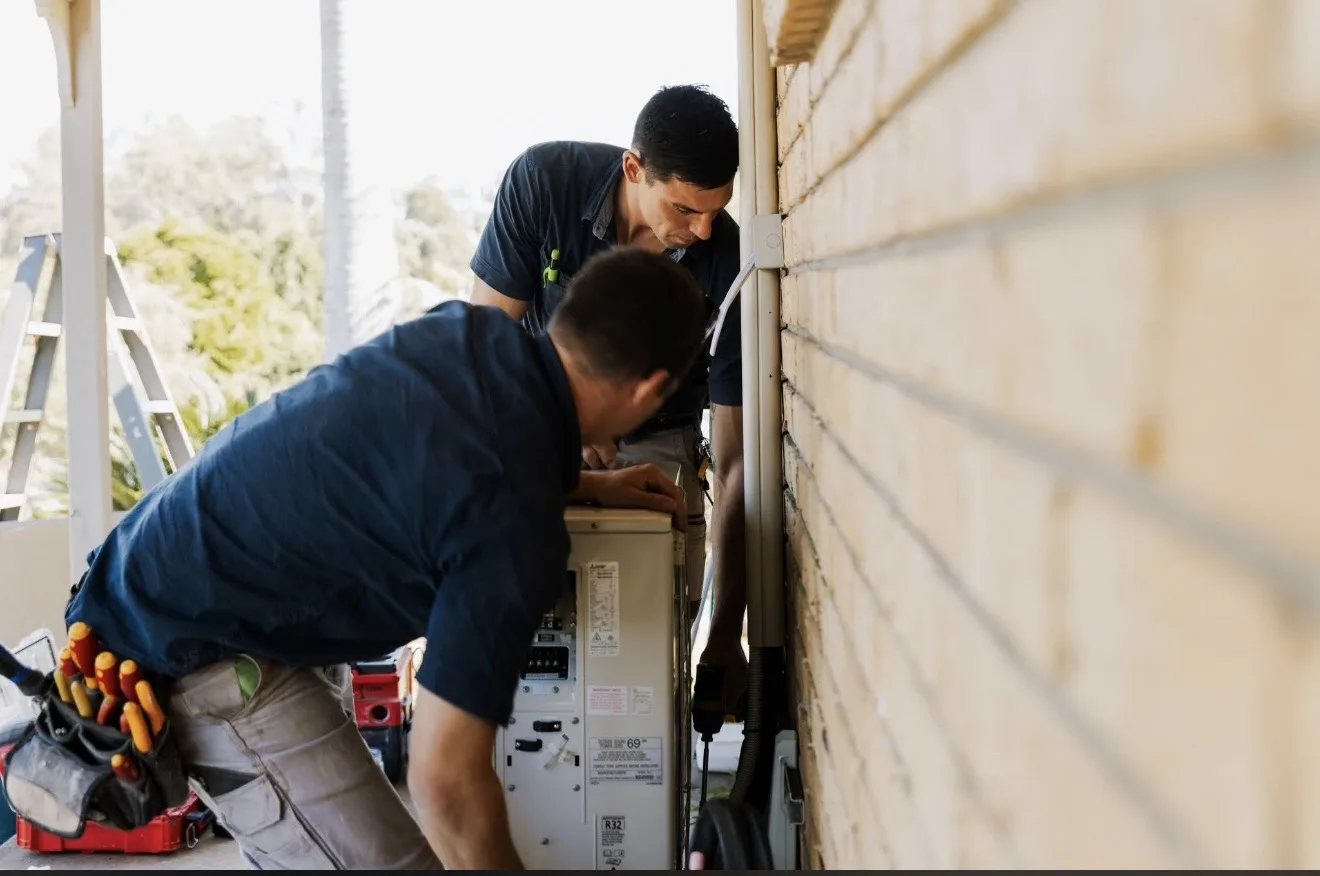
| Part | What’s inside | What it does |
|---|---|---|
| Indoor unit | Fan, cold coil (evaporator), washable filters, louvres | Cools and dries the room air, then pushes it back out |
| Outdoor unit | Compressor, second coil (condenser), large fan | Releases the heat taken from your room |
| Pipes and cable | Two insulated copper pipes, power and signal cable, drain line | Carries refrigerant, power and water between the two units |
The indoor unit
This is the long white unit high on the wall. Warm room air is drawn across the cold coil, cooled, and pushed back out.
It also dries the air. That drip from the drain pipe outside on a sticky January afternoon is water the unit has pulled out of your room. In a Brisbane summer, the drop in humidity does almost as much for comfort as the drop in temperature.
The outdoor unit
This is where the heat from your room ends up. It needs room to breathe, so boxing it in behind lattice or squeezing it into a hot, tight corner makes it work harder and cost more to run.
The pipes and cable between them
How far that bundle has to travel, and what it has to go through, does more to set the installation cost than most people expect.
Moving heat out instead of making cold
An air conditioner doesn’t really make cold air. It moves heat from one place to another.
The refrigerant absorbs heat from your room as it passes through the indoor coil. The compressor pumps it outside, where the outdoor coil releases that heat into the air. Then the refrigerant comes back inside and does it again.
Two things set a modern system apart from the old box on the window:
- The inverter. Older units ran flat out, switched off, then started again. An inverter speeds the compressor up and down to hold the temperature steady, which uses less power and keeps the room more even.
- Reverse cycle. A valve flips the direction the refrigerant flows, so the system pulls heat from the outside air and moves it into the room.
Because a reverse cycle system moves heat rather than generating it, it puts out several units of heat for every unit of electricity it uses. That’s why it costs less to run than a plug-in fan heater on a cold July night.
Single, multi-head and back-to-back split systems
Not every split system is set up the same way. These are the three setups you’ll hear about when you get a quote.
| Setup | How it works | Best for |
|---|---|---|
| Single split | One indoor unit, one outdoor unit | A main bedroom or a living area. The most common setup. |
| Multi-head split | One outdoor unit runs two or more indoor units, usually up to four or five | Separate control in several rooms with only one box on the side of the house |
| Back-to-back install | Indoor unit on the inside of an external wall, outdoor unit directly behind it | The shortest pipe run, so the quickest and least expensive install |
The trade-off with a multi-head system is that every room on that outdoor unit depends on it. If it fails, they all lose cooling at once.
Back-to-back is an installation style rather than a type of system. Most homes use wall-mounted indoor units, and floor-standing consoles and ceiling cassettes are options for rooms where a wall unit won’t fit.
Where a split system suits a Queensland home, and where it doesn’t
A split system is usually the right call if:
- you only need one to three rooms cooled, such as the main bedroom and the lounge
- your home has little or no roof space for ducting, which is common in older Ipswich houses
- you’d like to start with one room and add more as the budget allows
- you’re cooling a granny flat, home office or rental
It’s usually the wrong call if you want four or more bedrooms and the living areas all cooled evenly, or you’d rather not see a unit on the wall in every room. At that point ducted air conditioning tends to make more sense.
We’ve compared the two side by side in split system vs ducted, so here’s the short version. If your household spends most evenings in two rooms, paying to cool the whole house doesn’t add up.
Getting the size and position right
A split system that’s the wrong size is the most common problem we’re called out to fix:
- Too small: it runs flat out all afternoon without ever getting the room comfortable.
- Too big: it cools the room quickly, switches off before it has pulled the moisture out, and leaves the room cold and clammy.
Our guide to what size air conditioner you need breaks it down room by room.
Position matters nearly as much as size:
- Indoor unit. It should throw air across the room, not straight onto the bed or the couch.
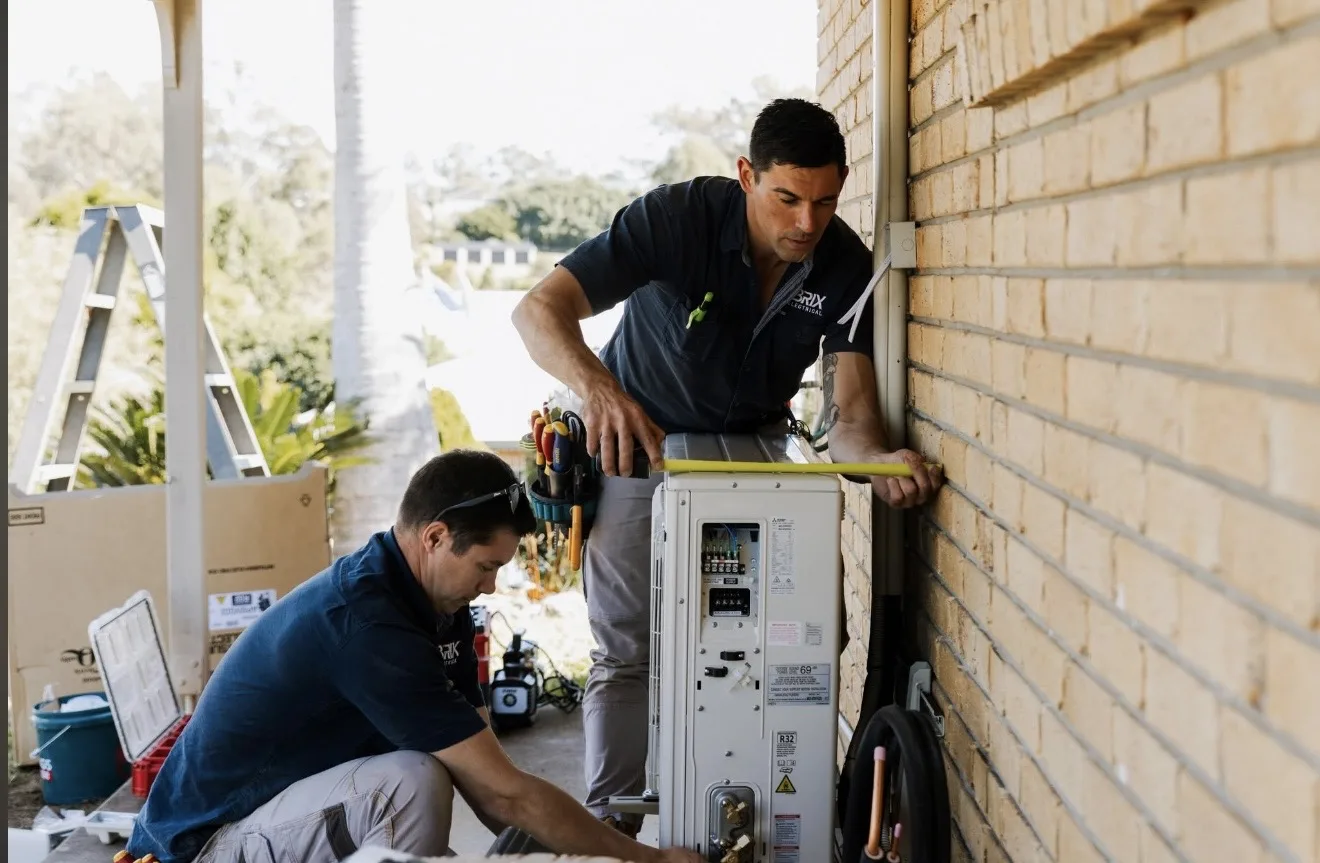
- Outdoor unit. It’s happiest in shade with clear airflow, and well away from your neighbour’s bedroom window.
- Switchboard. Larger units need their own circuit. If your home still has an older board with ceramic fuses, you may need a switchboard upgrade before a new system can go in. We check this at the quote, not on install day.
What a licensed installer handles on the day
A split system installation is two trades in one: electrical work and refrigerant work. In Australia, anyone handling refrigerant needs a refrigerant handling licence, and the wiring needs a licensed electrician. Our team is licensed for both, so there’s no subcontractor and no finger-pointing if something isn’t right.
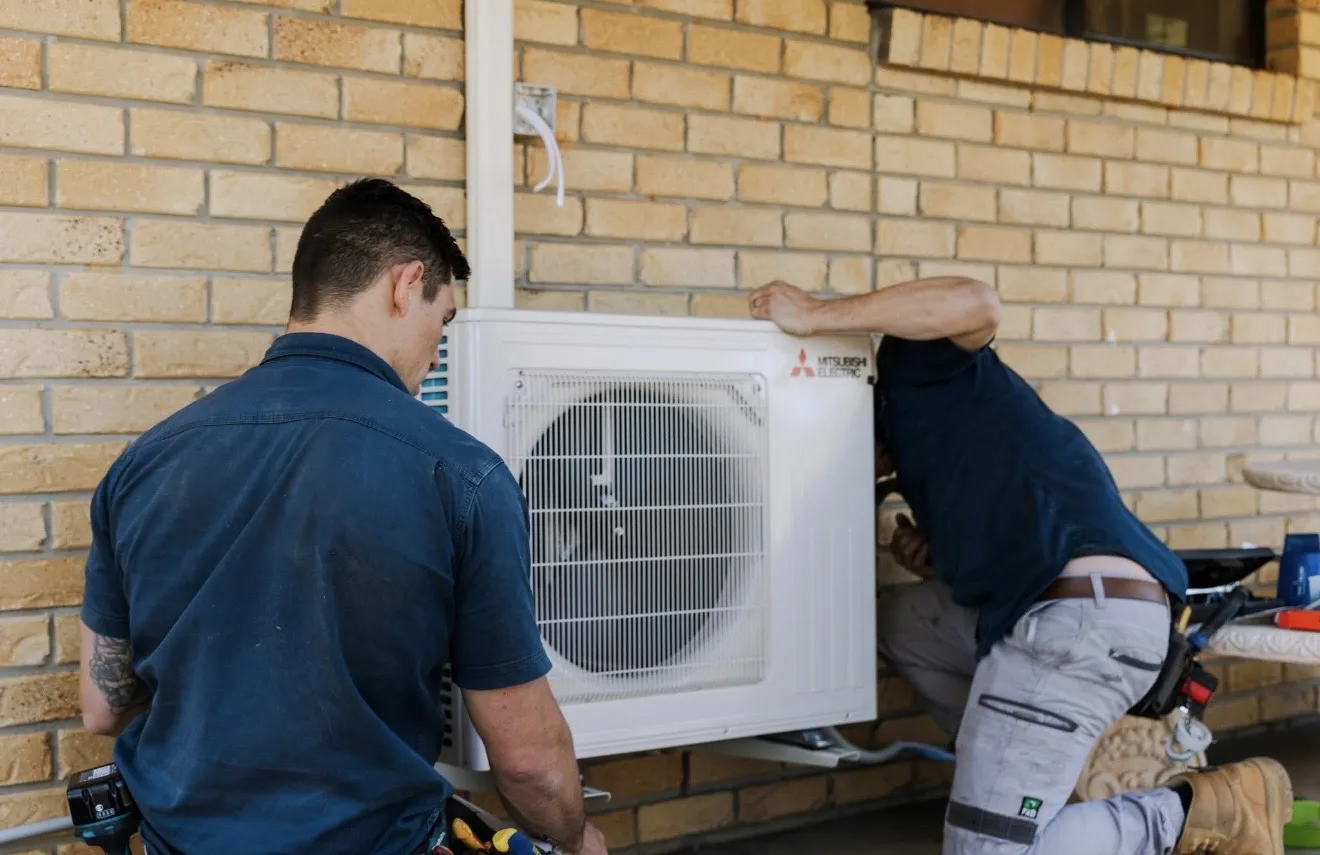
A proper install covers:
- Mounting the indoor unit level and secure, with the drain falling the right way
- Coring a neat hole through the wall and running the pipes, cable and drain
- Pressure testing the pipework for leaks
- Vacuuming the lines to remove air and moisture before the refrigerant is released
- Wiring, commissioning and testing in both cooling and heating
- Showing you how to use the remote and clean the filters
Step four is the one cheap installers skip. Moisture left in the lines can shorten the life of the compressor, and you won’t know until it fails out of warranty. A simple back-to-back install is usually finished within a day.
BRIX is a Mitsubishi Electric Diamond Dealer, and we install and service other major brands as well.
Keeping a split system running well
Two habits keep a split system efficient for years:
- Clean the filters every few weeks through summer. They slide out and rinse under the tap.
- Book a professional service once a year. A service checks what you can’t see, including the coil, the drain, the refrigerant pressures and the electrical connections.
Our air conditioning servicing covers all of it, including systems we didn’t install.
If you have solar panels, run the system through the middle of the day while you’re generating. Cooling the house before the afternoon peak is the cheapest cooling there is.
Get a straight answer on your split system
A split system is the simplest, most affordable way to cool the rooms you actually use, as long as it’s sized and installed properly. If you’re weighing one up for your home in Ipswich, Brisbane, Logan or Greater Springfield, we’ll come out, measure the room, check your switchboard and give you a free written quote before any work starts.
Want a faster answer? Use the photo upload on our enquiry form to send a picture of the room or your old unit. Or call the team on (07) 3060 9100.