
Information checked 8 October 2026. Source: Energex and Ergon Energy Network, Electrical Partners Alert, Withdrawal of Clause 8.14.4(b) of the Queensland Electricity Connection Manual (QECM), September 2026.
The short answer: Queensland’s EV charger rules changed on 1 October 2026. If your home runs on single-phase power, a standard 32A home charger (the one sold as 7kW) can now be installed at its full rating, with no network control device and no controlled tariff.
One thing hasn’t changed. The charger still adds to your home’s total load, so someone has to check your switchboard and supply can carry it. That job now sits squarely with your electrician.
Planning a home charger? Get a Free Quote and we’ll tell you what your board can handle before you buy anything.
What changed in the QLD EV charger rules on 1 October 2026
Energex and Ergon Energy Network have withdrawn clause 8.14.4(b) of the Queensland Electricity Connection Manual (QECM). That’s the rulebook electricians follow when they connect equipment to the network.
From 1 October 2026, home EV chargers no longer have to meet the switching load limit in clause 8.14.2.2. Here’s what that means at a glance.
| Single-phase 7kW (32A) charger | Before 1 October 2026 | From 1 October 2026 |
|---|---|---|
| Network control device | Required, unless the charger was turned down to 20A | Not required |
| Tariff | Economy (controlled) tariff, or main tariff with active management | Main tariff, no network control |
| Charging speed | Full 7kW only with a managed pathway, otherwise about 4.6kW | Full 7kW |
| Charging from solar | Not possible on the economy tariff route | Simpler to set up |
| Load check by your electrician | Required | Still required |
The notice was issued jointly, so it covers homes on the Energex network in South East Queensland and homes on Ergon Energy Network in regional Queensland. Both networks say the change will be written into the next release of the QECM.
The old 20A limit, and what it cost you
Queensland had a general limit of 20A for single-phase equipment. A 7kW charger draws 32A, so it sat over the line. To run one at full rating, your electrician had to pick one of three pathways:
- Economy tariff circuit. The network could switch the charger off during busy periods.
- Active management device. A smart charger on your main tariff, fitted with a device so the network could control it.
- Turn it down to 20A. About 4.6kW, so it stayed under the limit and charged more slowly.
Each pathway added cost, paperwork or a slower charge. The economy tariff route had a bigger catch for solar homes. Ergon says that option won’t let you charge from a solar PV system, and the middle of the day is exactly when most solar owners want to charge.
What a full 7kW charger means for your home
For most households, the install just got simpler. A single-phase 32A charger can go on your main tariff and run at its full rating:
- No network device to fit
- No separate controlled circuit to wire
- No reason to dial the charger back to 20A to stay compliant
It also settles the sizing question for most driveways. A 7kW single-phase charger is the default BRIX Electrical & Air recommends for the homes we see across Ipswich, Brisbane and Logan. The new rule takes away the main reason some owners were being pushed toward something bigger.
How fast it refills your car depends on the car’s onboard charger and battery size, not the box on the wall. Ergon describes a 7kW home charger as ideal for overnight charging, which suits most daily driving.
Not sure what suits your car? Our 7kW vs 22kW EV charger guide walks through it, or book a home EV charger installation site visit and we’ll check your setup in person.
Your switchboard still needs a load check
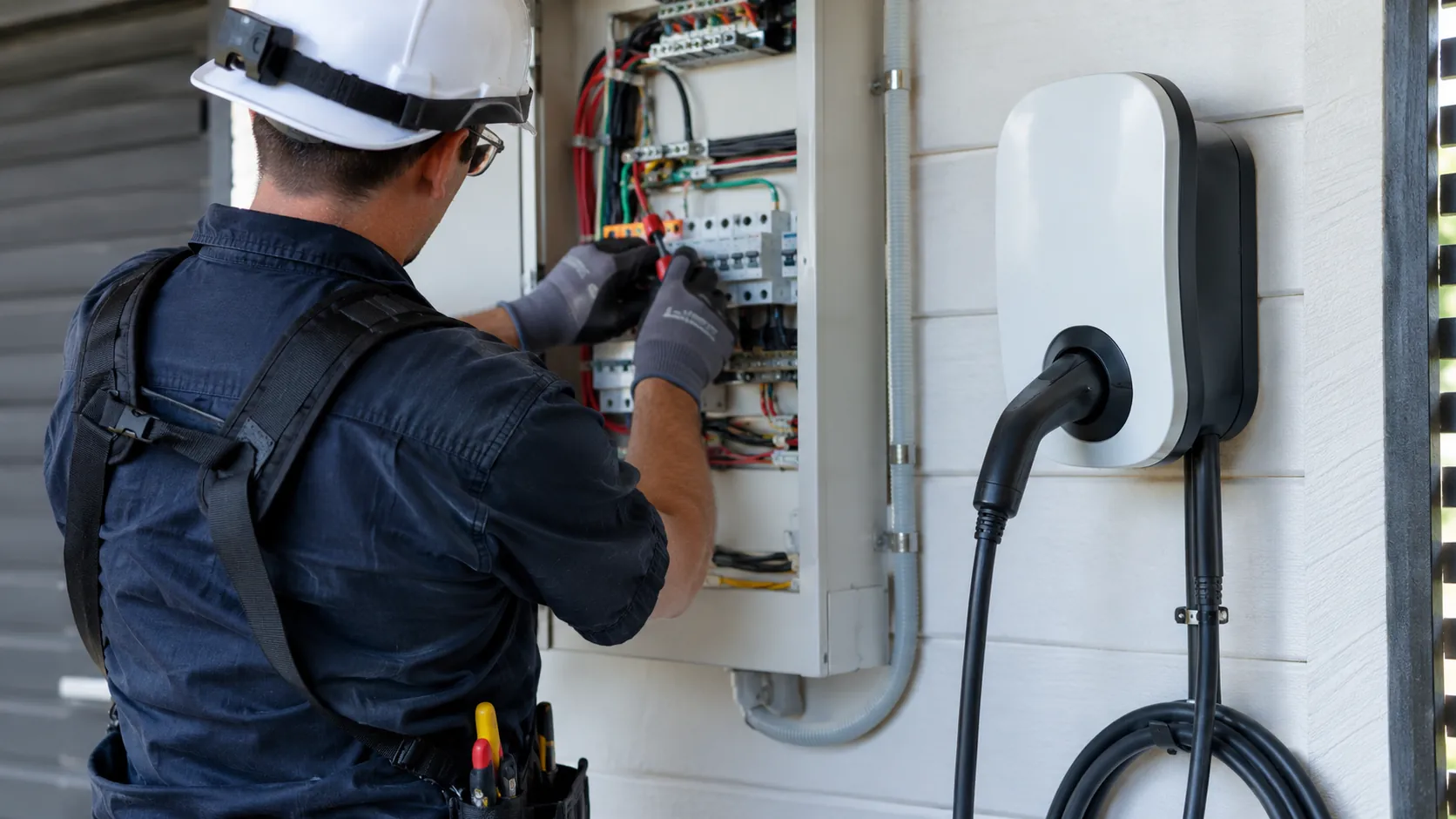
This is the part the headlines skip. The networks have told electricians to explain three things to every customer before a charger goes in:
- Your total load goes up. Maximum demand has to be recalculated and any protection changes made.
- The service fuse sets the ceiling. If the total load goes over the rating of the network’s service fuse, network upgrade work may be needed, along with a new connection agreement.
- Extra charges may apply. Call-out and upgrade charges may apply if a fuse replacement or network work is needed.
Ergon notes that many Queensland homes have a 50A or 63A service fuse. In July 2026 the networks flagged a growing number of homes overloading that fuse once EV and battery charging were added, especially when load was shifted to the middle of the day and cloud cut the solar output.
Put a 32A charger on top of air conditioning, an oven and a charging battery, and you can see how it happens.
When the numbers don’t fit, there are two usual fixes:
- Limit the charger. The charger is set to cap its demand under AS/NZS 3000.
- Upgrade the supply. Your electrician lodges a fuse or supply upgrade with the network.
On older Ipswich properties we often find the board itself is the bottleneck, particularly anything still running ceramic fuses. If that’s your place, a switchboard upgrade may need to come first. Our guide, does your home need a switchboard upgrade, covers the warning signs.
Already have a network-controlled charger?
Nothing breaks. If you already have a Type 2 or Type 3 active management device, it keeps working and the networks will keep supporting it. You can keep it or have it removed.
If your electrician lodged a work request for a basic active management device before 1 October and the job isn’t finished, you get a choice:
- Switch to the new rules. The request is cancelled and the charger is wired behind your main switch.
- Stay on the old rules. The job goes ahead and a network device is fitted.
Removal is optional, and whether it’s worth doing depends on your power plan and when you usually charge. Before you change anything, get your electrician to look at your setup. We can tell you whether keeping it or removing it makes more sense for your home.
7kW, 11kW or 22kW at home
Bigger isn’t faster if your car can’t use it. Here’s how we size a home charger.
| Your home’s supply | Charger we usually recommend | When it makes sense |
|---|---|---|
| Single-phase | 7kW (32A) | The standard choice for most homes. It can now run at full rating. |
| Three-phase | 11kW | A sensible step up, if your car’s onboard charger accepts 11kW AC. |
| Three-phase | 22kW | Only when your car’s onboard charger can take 22kW AC. A 22kW wallbox can only charge as fast as your car allows. |
Skipping hardware and cabling your car will never use keeps the job cheaper. Our EV charger installation cost guide breaks down what drives the price. For brand picks, see our best home EV chargers comparison.
Charging from solar under the new rules
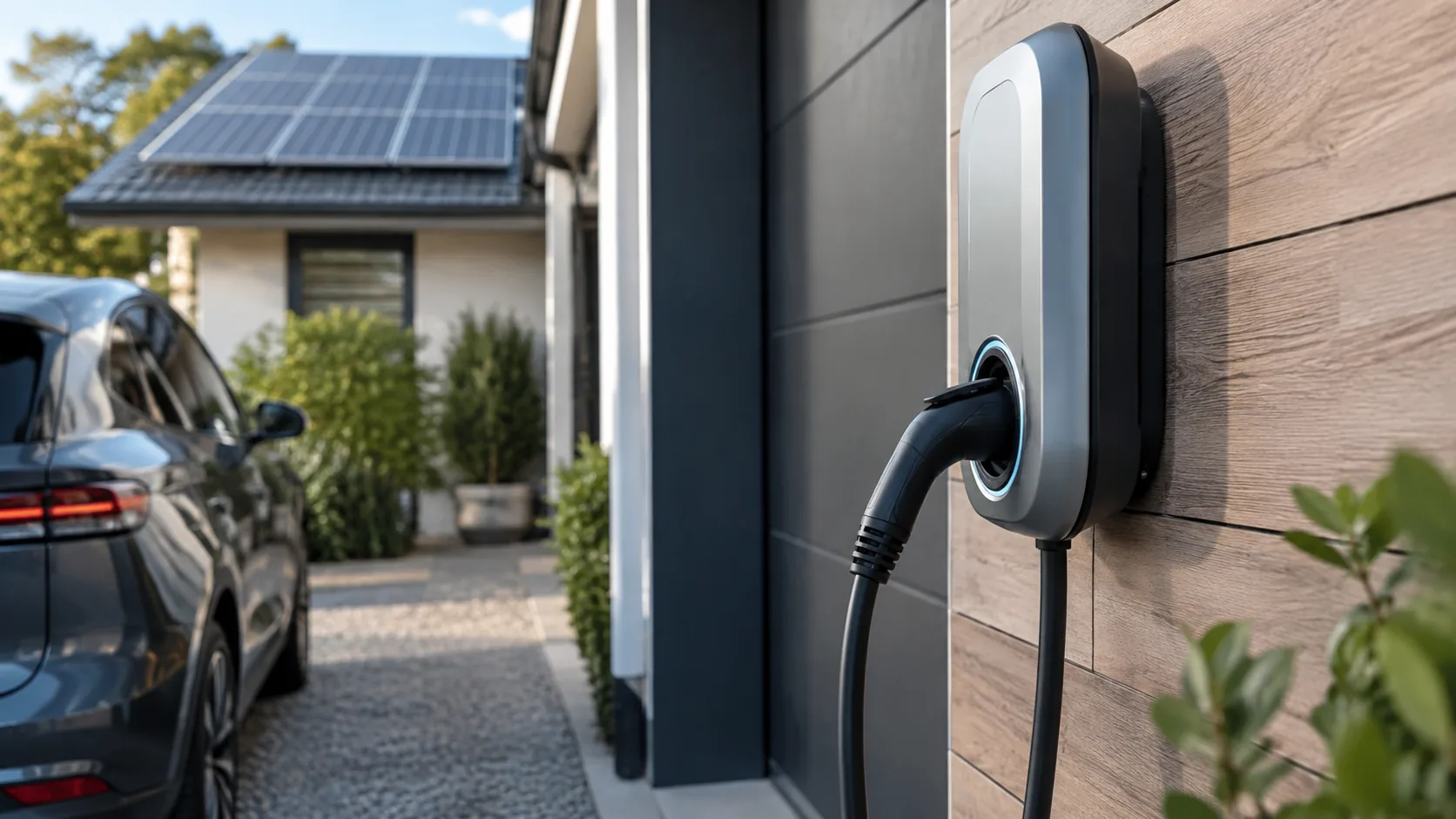
Before 1 October, a solar home that wanted a full 7kW charger had fewer options, and the economy tariff route ruled out charging from the panels. With a 32A charger now allowed on the main tariff at full rating, soaking up your daytime solar is simpler to set up.
A solar-aware charger can wait for spare generation and send it into the car instead of exporting it. Our solar EV charger guide explains how that works with an existing system.
If you’re weighing up solar battery installation at the same time, size the charger, battery and board together. The networks’ warning about midday overloads applies most to homes running all three at once.
How BRIX Electrical & Air installs a charger under the new rules
Every job starts with a site visit, not a phone quote. On that visit we confirm:
- Your car and its onboard charger
- Whether you’re on single or three-phase power
- The state of your switchboard
- Your maximum demand against the service fuse
- The cable run to where you park
- How the charger will work with any solar or battery you have
You then get a fixed written quote. The charger goes in on its own dedicated circuit with RCD protection, the work is tested, and any paperwork the network needs for your job is handled by us. You get the electrical safety certificate for the work at handover.
The crew that quotes the job does the job. BRIX Electrical & Air holds Electrical Contractor Licence 88304, and every job is handled in house. We handle EV charger installation in Brisbane and EV charger installation in Ipswich, plus Logan and Greater Springfield, as part of our wider residential electrical work.
Get a full-rate charger without paying for capacity you won’t use
BRIX Electrical & Air will check your board, your supply and your car, then give you a fixed written quote. Get a Free Quote or call (07) 3060 9100.